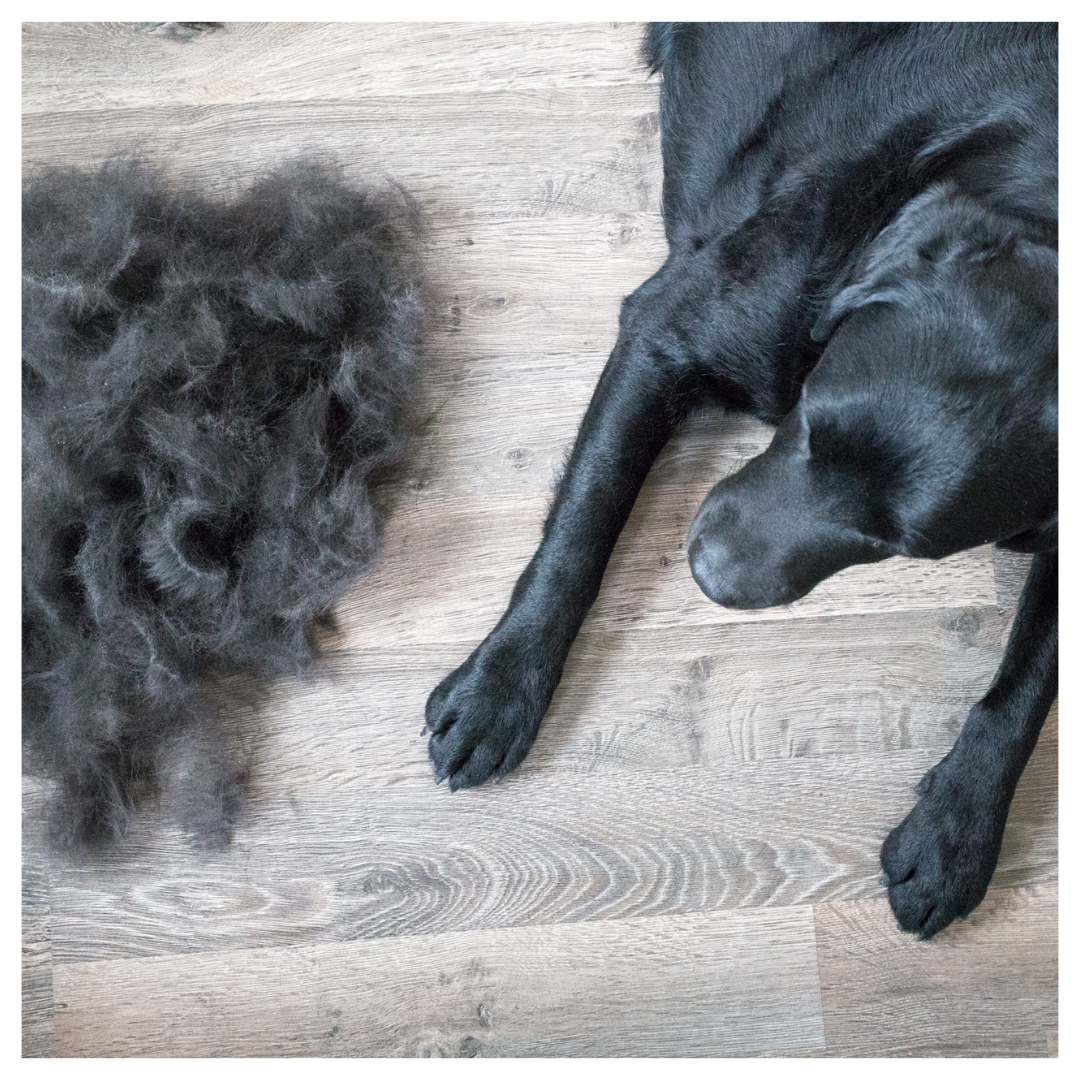
If you’re constantly sweeping hair off the floor, lint-rolling your clothes, and wondering how your dog could possibly shed so much, dog parents everywhere share your frustration. Shedding can turn your home, your car, and your clothes into a mess fast. So, what do groomers use to stop shedding? Are there any shedding remedies that actually work?
The truth is, shedding isn’t something you can stop, but it is something you can manage. With the right techniques, tools, and products, shedding can be reduced by up to 90%. I’ve spent more than two decades grooming every kind of coat type—from double-coated golden retrievers to short-haired beagles. I’ve learned exactly which shedding remedies truly make a difference, and which ones are a waste of time.
In this post, I’m sharing 7 proven strategies that I personally use to reduce dog shedding in my grooming studio every day. Everything here is safe, effective, and doable at home. It’s tried and true advice straight from the grooming table—brought to you by a loving groomer who truly cares.
Heads up, dog parents! 🐾 Some of the links in this post are Amazon affiliate links. That means if you click through and make a purchase, I may earn a small commission—at no extra cost to you. I only recommend products I truly trust and use daily in my grooming studio. Thanks for supporting my small business!
7 Dog Shedding Remedies You Can Use at Home
You’ve probably already tried brushing your dog and didn’t really see much difference—and that’s not your fault. Brushing alone just won’t do the trick, especially when it comes to seasonal shedding. To truly get your dog’s shedding under control, you need the right tools and products, used in the right order.
Here’s the routine I use to manage excessive shedding as a professional pet groomer, and how you can achieve similar results at home with the right products and techniques.
1. Use a Dog Shampoo That Helps with Shedding
If your goal is to reduce shedding, it all starts with the right shampoo. A good deshedding shampoo loosens undercoat, lifts away dirt, and moisturizes the skin and coat. And, clean, hydrated fur is much easier to brush than dirty hair or hair that’s been stripped of its natural oils.
When choosing a deshedding shampoo, look for formulas that are sulfate-free, pH-balanced for dogs, and made with moisturizing ingredients like aloe, honey, or amino acids. Skip anything with chemical perfumes, alcohols, or harsh detergents—they might smell nice, but they can dry out the skin and actually make shedding worse over time.
My top pick is Aminoflex® Pet Shampoo by Showseason. It’s packed with ingredients that restore moisture and strengthen the coat from the root—like silk proteins, wheat amino acids, aloe, almond extract, and Manuka honey. It leaves the coat soft, shiny, and hydrated to make deshedding easier.
Apply it on wet fur according to the instructions on the label, massage it in well, and rinse thoroughly. The results last, too—this shampoo leaves a light scent and smooth finish that can stick around for days. It’s safe, cruelty-free, made in the USA, and completely non-toxic. It’s a high-performance shampoo that gets the job done.
2. Always Follow with a Deshedding Conditioner
Conditioner is one of the most overlooked steps in the grooming process—but it’s one of the most important when it comes to skin health and reducing shedding. After shampooing, the hair cuticle is open and more prone to drying out or breaking. The best deshedding conditioners seal the coat, lock in moisture, and help release the undercoat so it can be brushed out more easily.
When shopping for a deshedding conditioner, look for formulas that are protein-enriched, pH-balanced for dogs, and free from ingredients that can cause itching, like heavy perfumes. Ingredients like amino acids, vitamin complexes, and natural oils (like jojoba or sesame) can help moisturize the coat and strengthen the hair shaft.
In the studio, I use Envirogroom Natural De-Shed Conditioner. It’s a plant derived conditioner blend made with aloe vera, panthenol, jojoba, shea butter, soy protein, vitamin e, burdock root, sesame oil, safflower oil, and goji berry extract. It’s also enriched with proteins, vitamins, and amino acids that strengthen the hair shaft, protect the skin, and improve coat texture.
The formula is also hypoallergenic, gluten-free, and pH balanced—safe for puppies, kittens, and dogs with sensitive skin. I love it because it significantly reduces brushing and drying. That means less stress for the dog and less work for me. The coat comes out soft and smooth with a silky finish that holds up between grooms.
3. Use a Bathing Brush to Remove Loose Hair in the Tub
Once you’ve worked the conditioner into your dog’s coat it’s time to reach for a bathing brush. Using a rubber brush while the coat is slippery with the conditioner can remove tons of dead undercoat that’s already on its way out. It also stimulates the skin, which encourages the natural release of seasonal undercoat and supports healthy coat turnover, allowing you to remove even more undercoat in a single session.
Use small, circular motions with light pressure, then follow up by moving methodically through the coat in the direction the hair grows. This is when you’ll really start to see results as the brush fills up over and over with loose hair. Brushing at this stage also helps spread the conditioner more evenly through the coat and down to the skin—so you get better results when you rinse. Be sure to protect your tub drain!
The type of bathing brush you use also matters. For short-haired dogs, I recommend a rubber curry brush like the Essentials Rubber Curry Grooming Brush. It’s easy to grip, simple to clean, and does a great job of removing loose hair during bath time. For dogs with thicker or longer coats, I like the KONG Zoom Groom. Its wide rubber “fingers” reach deeper into the coat to massage the skin, promote circulation, and make it easier to clean and de-shed at the same time.
Either way, this quick step in the tub can save you serious time by reducing the amount of hair you have to brush out later. In my experience, dogs tend to enjoy this process, too, because it doesn’t pull at the coat… and who doesn’t love a massage?
4. A Deshedding Spray Makes Brushing Easier and Reduces Drying Time
After you’ve thoroughly rinsed the conditioner out of the coat, applying a deshedding spray or leave-in conditioner will make brushing easier later. These sprays reduce static, smooth the cuticle, and make it easier to get a brush through the coat without tugging or breakage. Many are also formulated to reduce drying time.
Look for deshedding sprays that are lightweight, water-soluble, and safe for all coat types. They should condition and detangle without leaving behind heavy residue or buildup. When used as part of your grooming routine, the best deshedding sprays make your job easier. They also protect the coat between grooms, reduce matting, and help maintain softness and shine.
My top pick is Chris Christensen’s Ice on Ice Detangling and Finishing Spray. It’s a lightweight, silicone-free formula that conditions the coat while creating a protective barrier against dirt, debris, and environmental stressors. It helps prevent mats from forming, reduces static, and leaves a clean, smooth finish that makes brushing noticeably easier.
I like to mist it lightly over the coat right after towel-drying—before I start brushing or blow-drying. For coats that are especially thick or prone to tangling, you can also use it to spot-treat trouble areas. Just spray directly onto a dense area and work it in gently with your fingers to loosen the coat.
5. Blow Out Loose Undercoat Easily with a High-Velocity Blow Dryer
Blow drying with a high-velocity dryer is probably the most important step in the deshedding process. These dryers don’t just speed up drying time—they do an exceptional job of loosening and blasting out the undercoat, especially in dense or double-coated breeds. It’s one of the fastest, most effective ways to reduce shedding quickly.
Not every dog will love the sound or feel of a high-velocity dryer, especially if they’ve never been dried this way before. Go slow, start with the dryer on its lowest setting, and always protect their ears. I recommend using a Happy Hoodie to soften the noise and provide a calming pressure around the head. I also like to put cotton in the ears to soften the noise even further. It makes a big difference for most dogs and helps keep the drying process safe and comfortable.
It’s also important to note that blow drying is an extremely messy process. I recommend doing it outside or in a very well ventilated area. Consider wearing a mask to protect your lungs from breathing in the hair, and a beekeeper’s hat to keep flying hair out of your eyes. Hearing protection is also a good idea, such as earplugs or noise-cancelling headphones.
Look for dryers that offer adjustable speed, heat control, and a solid warranty. You’ll also want one that comes with multiple nozzle attachments so you can focus airflow where you need it most. With the right setup, you can remove a surprising amount of undercoat in just a few minutes—and dramatically cut down on post-bath brushing.
I love the Shernbao High Velocity Dryer. It’s very affordable, has adjustable airflow settings, multiple nozzles, and two temperature options, which makes it easy to tailor the drying process to each dog’s coat and comfort level. I recommend starting on the lowest setting to see how your dog tolerates the airflow, especially if they’ve never been dried this way before.
Whatever dryer you use, make sure the coat is fully dry before you start brushing. Brushing a damp coat can cause breakage and lead to skin irritation. Drying thoroughly also helps loosen even more dead hair and sets you up for a smoother, more effective brushing session. Most importantly, leaving moisture next to the skin, especially on a long or thick coated dog, can contribute to skin issues like yeast and fungus, so drying thoroughly is crucial.
6. Must Have Dog Shedding Tools for Different Coat Types
Regular brushing usually isn’t enough to remove seasonal shedding—especially when the undercoat is heavily compacted or coming out in clumps. That’s when it helps to have a few specialty tools in your kit. They’re designed specifically for tackling heavy shedding, working through thick coats, and getting into those dense spots where fur tends to collect.
To use a dog shedding tool like the ones below, work in small sections to break up matts or clumps of tightly compacted coat. Then follow with your regular brush to remove the loosened coat, and finish with a metal dog grooming comb to check your work.
For Double-Coated Breeds and Heavy Shedders
If you’ve got a dog with a long, thick double coat, I really like the MalsiPree 2-in-1 Undercoat Rake and Deshedding Tool. One side helps break up and remove compacted undercoat, and the other side is designed to pull out loose undercoat that typical brushes often miss. The rounded edges are gentle on the skin, and it’s a great choice for breeds like Pyrenees, Shepherds, and Goldens.
For Dense, Layered Coats
The Wahl 2-in-1 Rake and Shedding Blade is another go-to for me. The rotating rake pins move through thick coats without snagging, and the blade side helps thin out dense coat during seasonal shed cycles. It’s ideal for short to medium length coats and especially helpful during seasonal shedding when fur is coming out in handfuls. I love it for medium haired breeds like Labs, Huskies, and Corgis as well as short haired breeds like Bassets and Beagles.
For Working Out Tightly Compacted Clumps of Undercoat
The Wahl Premium Double-Sided Comb is ideal for working through large clumps of undercoat in small sections—especially behind the ears, around the ruff, on the legs, or anywhere hair tends to clump. The dual-height pins help grab and lift undercoat without pulling. It’s a simple but really effective tool to have in your kit if you’re dealing with dense coats, compacted fur, and even moderate matting. I use it on every coat type, and just about every dog that comes through my studio.
7. Choose the Best Dog Shedding Brush for Your Dog’s Coat Type
If you’ve ever felt like brushing your dog does absolutely nothing, it might not be your technique—it might be the brush. Using the wrong type of brush for your dog’s coat is one of the most common mistakes I see. Another mistake I see many pet parents make is brushing the top coat, but not getting down to the skin. This makes the top coat look nice, but it leaves matted or compacted fur next to the skin, which continues to worsen and tighten over time and may require shaving to remove.
When brushing your dog, start at the bottom of a rear leg, parting the hair to ensure that you’re getting all the way down to the skin. Work methodically in small sections, and brush in the direction the hair grows. Check each section with your metal dog grooming comb to ensure that the undercoat is removed all the way down to the skin before you move to the next.
Once you’ve finished the back legs, move to the body, then the front legs. I prefer to save the head, ears, and tail for last, since most dogs are more sensitive about these areas.This process is called line brushing, and it’s really the best way to brush any dog with a long, thick, dense, or curly coat—whether you’re dealing with shedding or matting, or just performing regular coat maintenance.
Here are my top brush picks based on coat type:
For Smooth-Coated Dogs (Beagles, Basset Hounds, etc.)
A boar bristle brush helps remove loose hair while distributing natural oils and polishing the coat. I like the Mars Coat King 7.25” Boar Bristle Grooming Brush. It’s gentle, durable, and great for short, flat coats that don’t tangle but still shed heavily.
For Small Dogs and Short to Medium Length Hair
For small dogs and short to medium length coats, I like the Chris Christensen Mark II Slicker Brush. It has ultra-soft steel pins and a flexible cushion base, which makes it gentle but effective at removing dead hair without irritating the skin. It’s a great choice for breeds like Corgis and Labs that don’t tangle much but still shed a lot.
For Medium to Long Coats and Double-Coated Breeds
This is where shedding gets serious—and the Chris Christensen Big G Slicker Brush is what I reach for. It has long, dense pins that reach deep into thick coats to remove trapped undercoat, break up tangles, and fluff the coat all at once. It’s especially good for dogs with long, thick double-coats like Pyrenees, Goldens, Aussies, and Shepherds.
Why Is My Dog Shedding So Much All of the Sudden?
A sudden increase in shedding can be frustrating—and messy—but it’s not usually a sign that something’s wrong. In many cases, it’s just your dog’s natural coat cycle responding to changes in season, temperature, and light exposure. Dogs typically shed more in the spring as they blow their winter coat in preparation for summer’s heat.
That said, there are a few other reasons shedding might ramp up unexpectedly. Stress, changes in routine, poor nutrition, or even a recent illness can all trigger increased hair loss. If your dog has just had surgery, moved homes, or experienced a big life change, a short-term shedding spike isn’t unusual.
What’s not normal? Bald patches, irritated skin, strong odor, or red, inflamed areas. If you notice any of those symptoms—or if the shedding seems excessive and isn’t tapering off—it’s best to check in with your vet to rule out underlying issues like allergies, infections, or parasites.
It’s also worth noting that indoor dogs with artificial lighting and climate control tend to shed lightly year-round, with a big spike in the spring. If your dog seems healthy otherwise, ramping up your deshedding routine with the steps in this post is often all it takes to get things back under control.
When is Dog Shedding Season in Georgia?
In Georgia, spring is the true shedding season. Most dogs start to blow their winter coat as temperatures warm up and daylight increases—typically around March through May. This is when I see the heaviest shedding in the grooming studio, and it’s not just double-coated breeds like Huskies, Labs, and Shepherds.
Beagles, Basset Hounds, Great Pyrenees, and Goldens shed just as much—sometimes more. It may not look like much at first, but once the coat starts coming out, it can feel like a never-ending pile of hair no matter the breed or coat type. Some Georgia dogs may also go through a light coat transition in the fall, but it’s rarely as noticeable or intense.
For indoor dogs in Georgia—especially those living in climate-controlled homes—shedding can happen at a low, steady rate year-round, with one big seasonal blowout in the spring. If you want to stay ahead of the shedding, early spring is the time to start. A consistent routine with the right tools makes a big difference—before the undercoat starts to pack in and mat.
It’s also important to note that dogs rarely blow all of their undercoat at once. It will likely take two or three thorough deshedding sessions spaced a few weeks apart—either at home or with a professional groomer—to keep seasonal shedding under control. A regular bathing and brushing routine every 6-8 weeks is usually enough to manage mild to moderate shedding throughout the rest of the year.
Does Deshedding Help Keep Your Dog Cooler?
Absolutely. While shedding is natural, too much loose undercoat packed against the skin acts like insulation—trapping body heat and making it harder for your dog to cool off in hot, humid weather. Removing that dead undercoat through regular deshedding allows better airflow, helps the skin breathe, and makes it easier for your dog to release body heat.
Does Shaving Stop Dog Shedding?
Unfortunately, shaving does not stop shedding. Cutting the hair shorter will reduce the amount of hair in your house, but the hair is still coming out—it’s just shorter. Instead of soft tufts of fur, you’ll likely see shorter, sharp hairs stuck to your clothes, furniture, and floors. This can be reduced if the groomer follows a proper deshedding procedure before shaving, but shaving won’t stop shedding completely.
However, shaving can help a dog stay cooler, more comfortable, and easier to maintain in the summer. Removing the excess coat helps a dog’s body release heat more efficiently in hot, humid weather. It also speeds up drying time, makes brushing easier, and can help keep the coat cleaner—especially for dogs who love to swim, hike, and spend time outdoors. That said, shaving does come with some risks you should be aware of.
In double coated dogs, the coat can grow back patchy or uneven because the undercoat grows in much more quickly than the outer guard hairs. It may take months or sometimes even years (especially in spitz and arctic breeds) for the coat to appear normal again. Keeping the skin and coat hydrated through proper diet and bathing, and brushing out the undercoat regularly, can help speed up the re-growth process and improve the appearance of the coat while it grows back in. Sunburn can also be a risk, so a shaved dog should be kept out of direct sun until the coat has grown out to at least 1/4 to 1/2 inch.
It’s important to know that there’s a lot of misinformation on the internet about a condition called “post-clipping alopecia.” Alopecia is usually the result of a skin or endocrine disorder. In most cases, it’s not actually caused by clipping the hair, it just becomes more obvious when you shave your dog and the hair doesn’t grow back normally. If you’re concerned about any potential risks of shaving your dog, I recommend consulting with your vet for personalized advice based on your dog’s health history.
At the end of the day, if your goal is to eliminate shedding, shaving isn’t the answer. But if your goal is to cut back on the hair in your house while keeping your dog cooler, cleaner, and more comfortable during the summer months, shaving is perfectly fine for most dogs—with proper aftercare and realistic expectations. Ultimately, it’s up to you to decide what’s best for you and your dog, and if you’re willing to look past the aesthetics while your dog’s coat grows out.
What is a Professional Shed-Less Treatment?
A professional shed-less treatment is a full-service grooming process designed to remove seasonal undercoat, reduce shedding by up to 90%, make your dog’s coat easier to maintain, and support skin and coat health. It includes the entire routine outlined above, but it’s done by a professional and leaves the mess at the salon.
Pet parents absolutely can buy the same equipment and products I use, but it’s an investment—and the actual process takes a lot more work than most people realize. It will take hours for most dogs, and for dogs with dense, long, or heavily compacted coats it might even take multiple sessions to complete the process at home. And the cleanup? It’s no joke. Hair clogs drains, blows into vents, sticks to walls, and ends up on your clothes, in your eyes, and all over your home. It truly gets everywhere.
In the studio, I have a professional setup that contains the mess and allows me to work efficiently and effectively in less time. I also have the training and experience to use the products and equipment safely, remove dense undercoat without damaging the skin, and get the best results more quickly. While DIY is possible, most pet parents find that it’s just not as effective or worth the time, mess, and investment.
Say Goodbye to Endless Shedding—The Smart Way
There’s no magic button to stop shedding—but with the right routine, tools, and a little consistency, you can keep it under control. Whether you decide to tackle it at home or call in a pro, the goal is the same: less loose hair, healthier skin and coat, and a dog that looks and feels better.
Following the steps in this post will help reduce shedding significantly during peak shedding season. Just keep in mind: it takes time, effort, and quite a bit of mess. If you’d rather skip the cleanup and get results faster, professional shed-less treatments are a great option. If you’re in the Blue Ridge, GA area, I’d love to help! Leave the mess with me, so you can enjoy your weekends with your dog, not vacuuming the floor.